
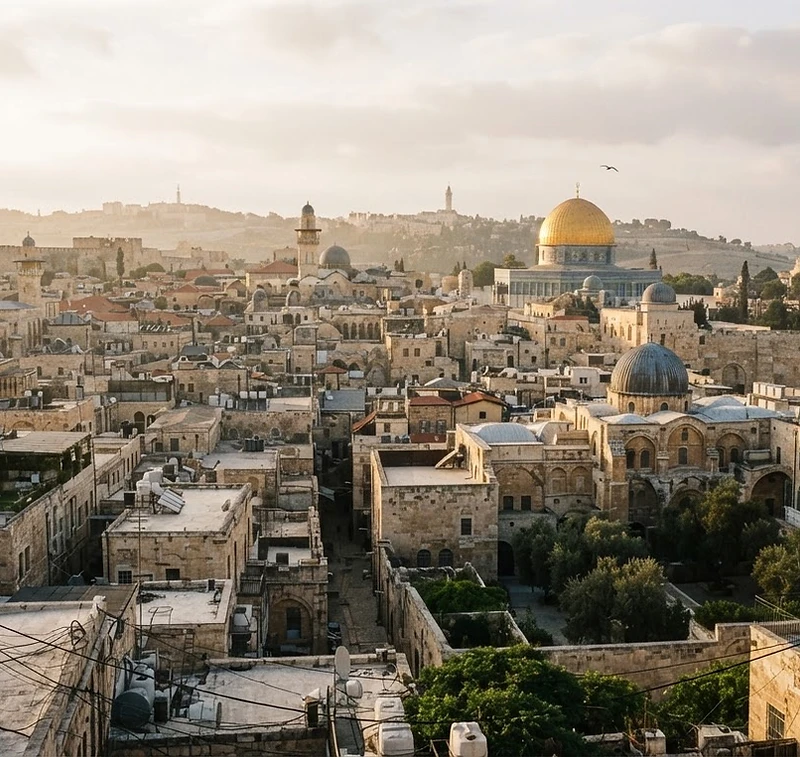
In brief: A well-designed university study tour to Israel combines biblical geography, archaeology, and theological reflection over 10-12 days, typically covering Jerusalem, Galilee, and the Dead Sea region. Academic credit, pre-departure coursework, and site-based lectures at locations like Caesarea Philippi and the Pool of Bethesda transform Scripture from text into lived, three-dimensional history for students.
Why the Holy Land Belongs in the Curriculum
For centuries, seminary and Bible college faculty have taught that geography shapes theology. Walking the ridge route from Jerusalem to Jericho, a 3,500-foot descent over roughly 17 miles, gives students a visceral understanding of the Good Samaritan parable (Luke 10:25-37) that no classroom map can replicate.
Study tours also address a documented gap in biblical literacy among incoming college students. Faculty consistently report that firsthand exposure to sites like the Sea of Galilee or Qumran increases retention of historical-critical material far beyond lecture alone.
- Experiential learning: Students encounter primary source geography, not secondary description.
- Interdisciplinary reach: Archaeology, ancient Near Eastern studies, theology, and political science all intersect in Israel.
- Formation, not just information: Many students report the trip as spiritually formative, not merely academic.

Setting Academic and Spiritual Objectives
Before booking flights, group leaders should draft clear, measurable learning outcomes. These outcomes anchor the itinerary and justify academic credit to registrars.
Consider structuring objectives around three pillars:
- Historical-geographical literacy — students can locate and explain the significance of at least 15 major biblical sites.
- Textual-critical engagement — students read assigned passages on-site and complete reflective journals.
- Spiritual formation — students participate in daily devotions, communion at a site such as the Garden Tomb, and guided prayer walks.
Pairing a faculty theologian with a licensed archaeological guide ensures both academic credibility and doctrinal integrity throughout the journey.
Building the Itinerary: Core Regions and Sites
A well-paced university tour typically runs 10-12 days and covers three core regions. Rushing the itinerary undermines both scholarship and worship, so pacing matters as much as content.
Jerusalem and Judea (4-5 days)
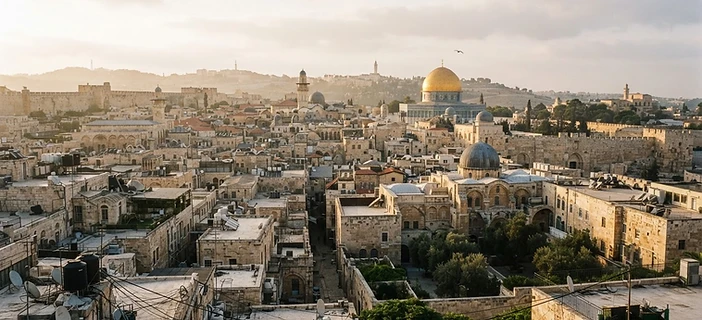
- Temple Mount overlook and the Southern Steps
- Western Wall and the Pool of Bethesda (John 5:1-9)
- Garden of Gethsemane and the Mount of Olives
- Via Dolorosa and the Church of the Holy Sepulchre
- Bethlehem, including the Church of the Nativity
Galilee and the North (3-4 days)
- Sea of Galilee boat crossing, recalling Mark 4:35-41
- Capernaum synagogue ruins, the ministry base of Jesus (Matthew 4:13)
- Mount of Beatitudes and Tabgha
- Caesarea Philippi, site of Peter's confession (Matthew 16:13-20)
Judean Desert and Dead Sea (1-2 days)
- Qumran caves and the Dead Sea Scrolls discovery site
- Masada, with its first-century Jewish history
- Baptism reflection at the Jordan River
Academic Credit, Faculty Roles, and Institutional Partnerships
Securing academic credit requires early coordination with a registrar's office and a clearly documented syllabus. Most institutions require a minimum of 45 contact hours for a 3-credit course, which a 10-12 day intensive trip can satisfy when paired with pre- and post-trip coursework.
Recommended course structure:
- Pre-departure: 3-4 seminar sessions covering historical geography, Second Temple Judaism, and trip logistics.
- On-site: Daily lectures, guided site instruction, and reflective journaling.
- Post-trip: A capstone paper or presentation integrating textual, historical, and spiritual observations.
Faculty leaders should also designate a spiritual life coordinator distinct from the academic lead. This division allows rigorous scholarship to coexist with unhurried worship, communion, and prayer.
Budgeting, Logistics, and Risk Management
Group leaders must balance academic ambition with fiscal and logistical realism. Israel remains a safe and welcoming destination for group travel, though tourism volumes have shifted significantly in recent years, which affects pricing and availability.
Key logistical considerations:
- Group size: 15-40 students is manageable for most university cohorts; larger groups require sub-splitting for site visits.
- Timing: Spring (March-May) and fall (September-November) offer the most temperate weather for extensive walking itineraries.
- Insurance: Comprehensive travel and medical coverage is non-negotiable for institutional liability.
- Local guides: Licensed, English-speaking guides are legally required for group tours in Israel and greatly enhance academic accuracy.
A transparent budget should separate airfare, ground transportation, lodging, guide fees, entrance fees, and a contingency line of at least 10 percent.
Assessment: Measuring Learning and Spiritual Growth
Assessment should mirror the dual purpose of the trip. Academic rigor and spiritual formation both deserve intentional evaluation, even though the metrics differ.
Suggested assessment tools:
- Daily reflective journals scored against a formation rubric.
- A geography quiz identifying key sites on an unlabeled map.
- A final integrative paper connecting one biblical text to its physical setting.
- An anonymous post-trip survey measuring perceived spiritual impact.
Many faculty leaders find that students who struggled with historical-critical texts in the classroom gain sudden clarity once they stand where the events occurred. This is the pedagogical payoff that justifies the cost and complexity of the trip.
Practical Timeline for Planning
A realistic planning timeline protects both academic quality and pricing stability. Israel's tourism sector has seen substantial fluctuation, with entries dropping from 4.9 million visitors in 2019 to 974,400 in 2024 according to the Israel Central Bureau of Statistics, which has affected vendor availability and lead times.
Suggested 12-month timeline:
- Months 1-2: Define learning outcomes, secure registrar approval, select faculty and spiritual life coordinator.
- Months 3-4: Partner with a licensed tour operator experienced in academic and faith-based groups.
- Months 5-8: Recruit students, finalize itinerary, and open registration with clear pricing.
- Months 9-10: Conduct pre-departure seminars and distribute reading materials.
- Months 11-12: Finalize logistics, travel insurance, and emergency contact protocols.
Starting early also allows flexibility to adjust dates or components in response to regional conditions, which any responsible group leader should monitor closely.
Why Verity Israel
Verity Journeys exists to help Christian educators turn Scripture into a lived encounter, without sacrificing academic rigor or spiritual depth. Our team works directly with faculty to design custom itineraries that satisfy registrar requirements while honoring the sacred weight of these sites.
We partner with licensed Israeli guides, vetted lodging, and experienced logistics coordinators so that your students can focus on learning and worship rather than logistics. From the shores of Galilee to the Garden Tomb, we walk alongside your group at every step.
If your institution is exploring a study tour to Israel, we would be honored to talk through your academic goals, timeline, and budget. Reach out to Verity Journeys to begin building a Holy Land experience your students will carry with them for a lifetime.