
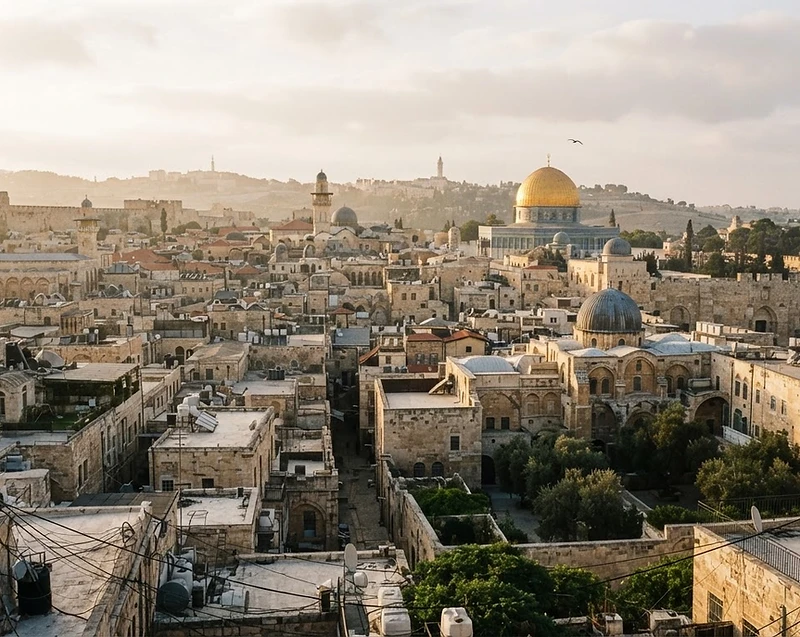
Quick Answer: A Messianic tour to Israel connects congregations to the Hebraic roots of their faith through sites like Jerusalem, the Galilee, and the Dead Sea. Successful trips blend Torah-aware teaching, New Testament fulfillment, and hands-on encounters with the Land, typically running 8-10 days for groups of 20-100 travelers.
Why Do Messianic Congregations Travel to Israel?
For Messianic believers, Israel is not simply a historical backdrop. It is the living stage where the promises to Abraham, Isaac, and Jacob unfold and where Yeshua walked, taught, and rose again.
A pilgrimage grounds abstract Scripture in tangible geography. Walking the shoreline of the Sea of Galilee where Jesus called Peter and Andrew (Matthew 4:18-20) transforms a familiar passage into a memory.
Congregations often report that Israel trips reignite personal devotion and unify small groups long after returning home. The trip becomes a shared testimony that binds a congregation together for years.
- Deepens understanding of Jewish feasts and their fulfillment in Messiah
- Builds solidarity with the modern State of Israel and the Jewish people
- Provides pastors fresh illustrations for years of future teaching
- Strengthens congregational identity and unity through shared experience

What Does the Global Data Say About Religious Travel?
Faith-based travel is not a niche market; it is a substantial and growing global sector. According to Grand View Research, the global religious tourism market was valued at $286.6 billion in 2024 and is projected to reach $671.9 billion by 2030, growing at a 15.6% compound annual growth rate.
The United Nations World Tourism Organization (UNWTO) estimates that between 300 and 600 million religious trips occur worldwide each year. This makes pilgrimage travel one of the largest segments of purposeful tourism on earth.
Israel itself has seen fluctuating visitor numbers. Israel's Central Bureau of Statistics reported 974,400 tourist entries in 2024, a steep decline from the 4.9 million tourists recorded in 2019, largely due to regional conflict.
This dip means smaller crowds at major sites right now. For congregations willing to travel thoughtfully during this season, that translates into quieter holy places, more time for reflection, and more attentive local guides.
How Should a Congregation Plan the Itinerary?
A well-built itinerary balances spiritual depth with physical pacing. Most congregational trips run 8 to 10 days, allowing time in Jerusalem, the Galilee, and often the Dead Sea region.
Core regions to include:
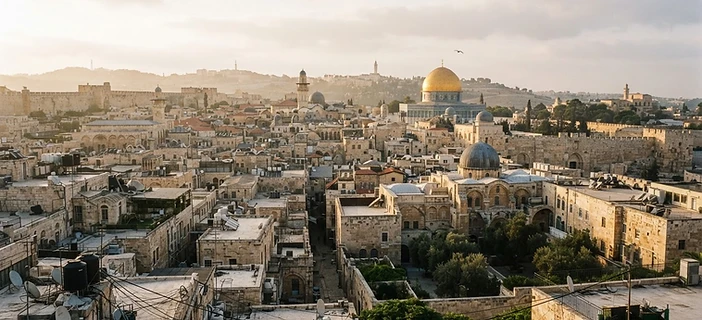
- Jerusalem — the Temple Mount overlook, Garden Tomb, City of David, Western Wall
- Galilee — Capernaum, Mount of Beatitudes, boat ride on the Sea of Galilee
- Judean Desert — Masada, Dead Sea, Qumran (site of the Dead Sea Scrolls)
- Bethlehem — Church of the Nativity and shepherds' fields
- Jordan River — baptism site at Yardenit near the Sea of Galilee
Pace matters as much as itinerary content. Build in rest, hydration breaks, and at least one unstructured afternoon so travelers can process what they are experiencing.
Many Messianic groups also request a Shabbat experience, including a Friday evening dinner reflecting on Leviticus 23 and the biblical feasts. This is often the emotional highlight of the trip for first-time travelers.
What Theological Themes Should Guide the Teaching?
A Messianic tour should braid the Hebrew Scriptures and the New Testament together rather than treating them as separate stories. Guides and pastors can anchor daily devotions in specific passages tied to each location.
- At the Sea of Galilee, teach Matthew 4:18-22 alongside Isaiah 9:1-2, showing prophetic fulfillment
- At Bethlehem, connect Micah 5:2 with Luke 2:1-7
- At the Garden Tomb or Church of the Holy Sepulchre, teach Isaiah 53 alongside 1 Corinthians 15
- At Masada and Qumran, discuss Second Temple Judaism as the world into which Yeshua was born
This approach honors the Jewish context of the New Testament while affirming its fulfillment in Messiah. It resists the temptation to treat the Old Testament as merely preparatory, instead showing continuity and covenant faithfulness across both testaments.
Pastors should also prepare congregants for the emotional weight of certain sites. Yad Vashem, Israel's official Holocaust memorial, is sobering and should be paired with time for prayer and quiet reflection rather than rushed scheduling.
What Are the Practical and Budgeting Considerations?
Group leaders need clarity on cost, logistics, and safety long before departure. Transparent planning builds trust with congregation members who may be investing significant savings into the trip.
Key logistical items to confirm with your tour operator:
- Group size minimums and maximums (most operators price best between 20-40 travelers)
- Whether the price includes a licensed Israeli tour guide, which is legally required for group touring
- Airport transfers, three meals per day, and four-star hotel accommodations
- Travel insurance options, including trip cancellation and medical evacuation coverage
- Current U.S. State Department travel advisories for Israel and the West Bank
Congregations should also plan a fundraising and payment timeline. Many churches offer scholarship funds or fundraising dinners to help members who could not otherwise afford the trip.
A deposit schedule of roughly 90-120 days before departure, with a final balance due 60 days out, is standard across the industry. Ask your operator for a written cancellation and refund policy in advance.
How Do You Choose the Right Tour Operator?
Not all Israel tour companies understand Messianic theology or congregational needs. Leaders should vet operators carefully before signing a contract.
Questions to ask a prospective operator:
- Do your guides have experience leading Messianic or Hebraic-roots groups specifically?
- Can the itinerary be customized around our congregation's teaching themes?
- What is your safety protocol if regional conditions change?
- Do you work with licensed Israeli guides and vetted local partners?
- Can you provide references from other congregations you have served?
A reputable operator will welcome these questions and provide referenceable testimonials. Be cautious of any company unwilling to share past client contacts.
What Should First-Time Travelers Expect Physically and Spiritually?
Israel trips involve significant walking, often 3-5 miles a day across uneven terrain, including ancient stone streets and desert paths. Comfortable, broken-in walking shoes are essential, along with sun protection given Israel's Mediterranean climate.
Spiritually, many travelers describe a kind of holy disorientation in the first few days. Seeing familiar Bible stories made physical can feel overwhelming before it becomes clarifying.
Encourage congregants to journal daily and to resist filling every moment with photographs. The goal is presence, not just documentation, and that is worth repeating to your group before departure.
- Pack for layered weather; Jerusalem evenings can be cool even in summer
- Bring a personal Bible or reading device loaded with a Hebrew-English parallel text
- Set an intention or prayer focus before the trip begins
- Plan a debrief gathering back home within two weeks of return
Why Verity Israel
Verity Journeys designs faith-centered pilgrimages that honor both the Hebrew Scriptures and their fulfillment in the New Testament. Our team partners with licensed Israeli guides experienced in Messianic and Hebraic-roots teaching, so your congregation experiences the Land through Scripture, not just sightseeing.
We handle the logistics — accommodations, transportation, safety monitoring, and fundraising resources — so your pastoral team can focus on shepherding your people through the journey. From Jerusalem's ancient stones to the shores of Galilee, we would be honored to help your congregation walk where the story of redemption unfolded.
Reach out to Verity Journeys to begin building an itinerary tailored to your congregation's teaching calendar, budget, and spiritual goals. Your people's next chapter of faith may be waiting in the Land of the Bible.