
Quick answer: A university study tour to the Holy Land should pair academic credit-bearing coursework (biblical studies, archaeology, or history) with structured site visits across Jerusalem, Galilee, and the Dead Sea region. Successful programs run 8–12 days, integrate pre-departure syllabi, and partner with an experienced ground operator to manage safety, permits, and interfaith access to holy sites.
Why Bring Students to Israel Rather Than Teach From a Textbook?
Scripture becomes three-dimensional when students stand where it happened. Walking the shoreline where Jesus called Peter and Andrew (Matthew 4:18-20) changes how an undergraduate reads the Gospels forever.
Academic tourism to Israel is not new, but it is growing in strategic importance for Christian universities. According to Grand View Research, the global religious tourism market was valued at $286.6 billion in 2024 and is projected to reach $671.9 billion by 2030, growing at a 15.6% CAGR — student and pilgrim travel is a meaningful driver of that expansion.
For a religion, history, or biblical languages department, a study tour offers something a classroom cannot:
- Direct exposure to archaeological strata at sites like Megiddo, Masada, and the City of David
- Firsthand encounter with the geography that shapes biblical narrative — the Jordan Rift Valley, the Judean wilderness, the Sea of Galilee
- Interaction with Israeli and Palestinian Christian communities preserving ancient traditions

What Academic Framework Should Anchor the Trip?
A study tour needs more structure than a typical pilgrimage. Faculty should build the trip around a defined course with learning objectives, readings, and assessment.
Recommended course design steps:
- Select a disciplinary lens — biblical archaeology, church history, Second Temple Judaism, or comparative religion
- Assign pre-departure readings (Josephus, the Gospels, a modern historical geography text)
- Require a daily field journal tied to specific sites visited
- Build a capstone assignment — a research paper, oral presentation, or digital exhibit
- Register the trip with your registrar for credit hours before recruiting students
Many universities partner with Israeli institutions such as the Hebrew University of Jerusalem or the Jerusalem University College for guest lectures, which strengthens both academic rigor and institutional legitimacy.
Which Sites Deliver the Greatest Academic and Spiritual Return?
Not every site earns its place on a tight itinerary. Prioritize locations with strong textual, archaeological, and pedagogical value.
Core academic sites to include:
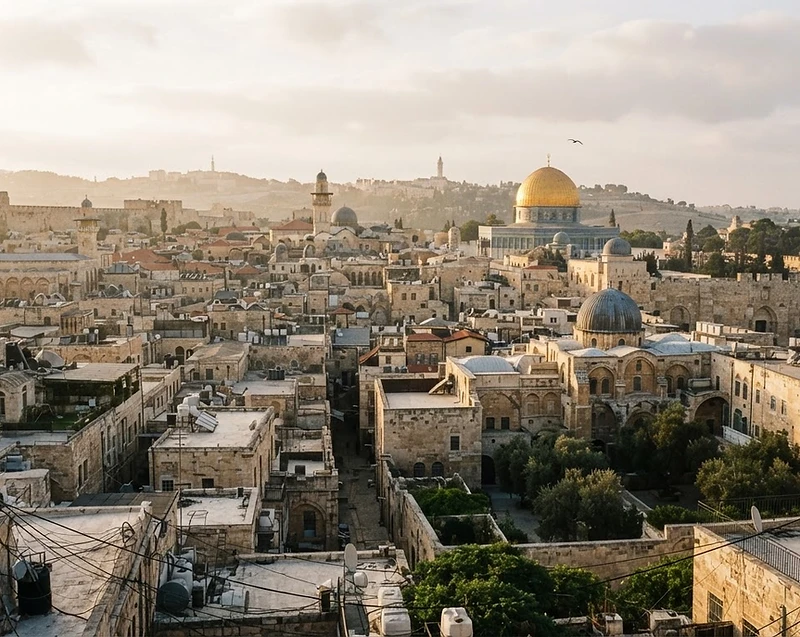
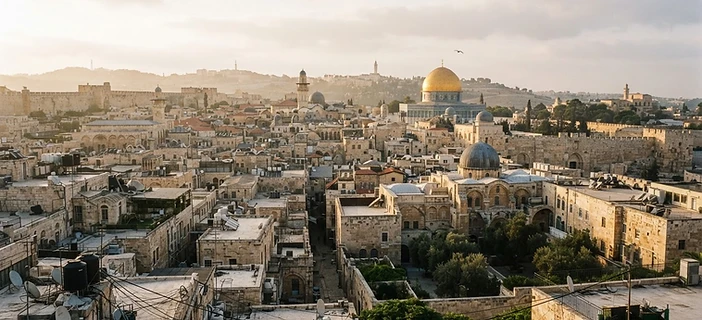
- Jerusalem's Old City — the Western Wall, the Church of the Holy Sepulchre, and the Temple Mount overlook, connecting students to Solomon's Temple (1 Kings 6) and the crucifixion narrative
- City of David — ongoing excavations tied to 2 Samuel 5:7
- Masada — Herodian architecture and the Jewish revolt (66-73 A.D.), documented by Josephus
- Sea of Galilee region — Capernaum, the Mount of Beatitudes, and Tabgha, tied to the Sermon on the Mount (Matthew 5-7)
- Qumran — the discovery site of the Dead Sea Scrolls in 1947, essential for textual criticism courses
- Caesarea Maritima — Herod's Roman port city and the site of Paul's imprisonment (Acts 23:33)
A well-paced 10-day itinerary can realistically cover Jerusalem (3-4 days), the Dead Sea and Masada (1 day), Galilee (3 days), and the coastal plain (1-2 days).
How Should Group Leaders Budget and Structure the Trip?
Cost transparency is essential for university approval boards and student recruitment. Israel welcomed 974,400 tourist entries in 2024, according to the Israel Central Bureau of Statistics — a steep decline from 4.9 million in 2019 due to regional conflict, which has actually improved access and reduced crowding at major sites for current groups.
Typical budget line items:
- Round-trip international airfare
- Licensed tour guide fees (Israeli law requires a certified guide for group site interpretation)
- Ground transportation via private motorcoach
- Hotel or pilgrim guesthouse accommodations (double occupancy standard)
- Entrance fees to national parks and archaeological sites
- Travel insurance and medical evacuation coverage
- Faculty honorarium or course-release compensation
Universities should build in a contingency fund of 8-10% for currency fluctuation and emergency needs. Encourage students to apply for departmental travel grants, denominational scholarships, or study-abroad financial aid early.
What Safety and Logistical Protocols Are Non-Negotiable?
Student safety is the single greatest liability concern for any university-sponsored international program. A rigorous protocol protects students and the institution alike.
Essential safety measures:
- Register the trip with the U.S. State Department's STEP program (or equivalent for your home country)
- Require comprehensive travel insurance with medical evacuation coverage
- Partner with a ground operator who maintains real-time contact with the Israeli Ministry of Tourism advisories
- Establish a 24-hour emergency contact protocol with campus security and parents
- Conduct a pre-departure orientation covering cultural norms, dress codes at holy sites, and health precautions
- Designate a licensed local guide who can navigate itinerary changes due to security conditions
Group leaders should also review the university's Title IX and code of conduct policies as they apply abroad, since study tours combine academic, spiritual, and social dynamics that require clear boundaries.
How Do You Balance Academic Rigor With Spiritual Formation?
A Christian university study tour is not merely an academic exercise — it is formational. Students should leave changed in both mind and spirit.
Build daily devotional time into the schedule alongside lectures. A short reflection at the Garden Tomb or the Jordan River baptismal site allows Scripture to move from analysis to encounter.
Practical integration strategies:
- Pair each academic lecture with a corresponding devotional or worship moment
- Invite a chaplain or campus pastor to co-lead alongside faculty
- Schedule quiet reflection time at emotionally significant sites like Gethsemane (Matthew 26:36-46)
- Close the trip with a communion service, ideally near the Sea of Galilee or in Jerusalem
This dual approach honors both the university's academic mission and its Christian identity, producing graduates who can defend the historicity of the text and testify to its living power.
What Should Faculty Do Before, During, and After the Trip?
A successful study tour is a year-round project, not a two-week event.
Before departure:
- Finalize syllabus, readings, and assessment rubrics
- Confirm visas, passports (valid 6+ months beyond travel dates), and insurance
- Host a mandatory orientation session
During the trip:
- Debrief each evening as a group to process the day's learning
- Maintain a shared photo and reflection archive for later use in recruitment materials
After return:
- Require a final research submission or presentation
- Host a public showcase for the campus community
- Survey students for program improvement and testimonials for future cohorts
Why Verity Israel
Verity Journeys has spent years building trusted relationships with licensed Israeli guides, Christian universities, and campus ministries who need more than a vendor — they need a partner who understands both academic accreditation requirements and the sacred weight of walking where Jesus walked. We handle the logistics, safety protocols, and site permits so your faculty can focus on teaching and your students can focus on encountering the living Word. If your department or campus ministry is ready to design a study tour that honors both scholarship and Scripture, we would be honored to help you plan it — reach out to Verity Journeys and let's build an itinerary that transforms your students for a lifetime.