
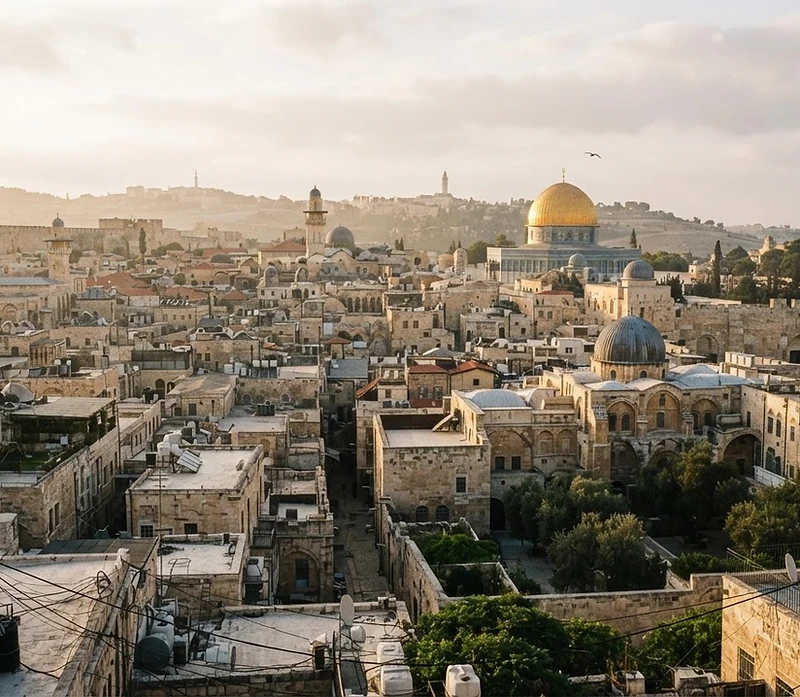
Quick Answer: Global religious tourism reached $286.6 billion in 2024 and is projected to hit $671.9 billion by 2030 (Grand View Research). Israel welcomed 974,400 tourists in 2024, down from a record 4.9 million in 2019 (Israel CBS), while Italy (71M) and Greece (36M) posted strong 2024 arrivals—underscoring both the resilience and opportunity of faith travel today.
The Global State of Christian Pilgrimage
Pilgrimage is not a fading tradition—it is a growing global movement. The UNWTO estimates that 300 to 600 million religious trips occur worldwide each year, spanning Christian, Muslim, Jewish, Hindu, and Buddhist traditions.
With roughly 2.4 billion Christians worldwide (Pew Research Center), even a small percentage choosing pilgrimage each year represents millions of believers walking in the footsteps of Scripture.
For group leaders, this means demand for well-organized, theologically grounded trips is not shrinking. It is expanding, especially as churches recover from pandemic-era pauses and re-prioritize discipleship-based travel.

Why the Data Matters for Group Leaders
Understanding pilgrimage statistics helps pastors and group leaders plan wisely, budget accurately, and cast vision with credibility.
- Timing: Tourism data reveals seasonal patterns that affect airfare, hotel availability, and crowd size at holy sites.
- Safety planning: Regional entry numbers reflect real-time stability and help leaders make informed decisions.
- Budgeting: Market growth trends (15.6% CAGR through 2030) suggest costs may rise, making early booking wise stewardship.
- Group casting: Sharing real numbers with your congregation builds trust and urgency—people respond to truth, not hype.
As Hebrews 11:8 reminds us, Abraham "went out, not knowing where he was going"—but data helps today's pilgrims go out prepared.
Israel: Recovery Amid Reality
Israel remains the heart of Christian pilgrimage, home to Jerusalem, Bethlehem, the Sea of Galilee, and the Jordan River.
According to the Israel Central Bureau of Statistics (CBS), tourist entries fell sharply:
- 2019: 4.9 million visitors (a record high)
- 2024: 974,400 visitors, reflecting regional conflict's impact on travel
This dramatic shift matters for group leaders. Smaller crowds at sites like the Garden Tomb, the Mount of Beatitudes, and the Jordan River baptismal sites can mean more intimate, reflective experiences—a silver lining for those who travel wisely and with trusted, security-conscious operators.
Practical takeaway: Lower tourist volume in Israel currently allows for:
- Shorter wait times at major sites
- More availability for group baptisms and worship services
- Greater flexibility in scheduling with local guides
Greece and Italy: Steady Growth for Pauline and Early Church Sites
While Israel navigates recovery, Greece and Italy continue drawing strong numbers, both regions rich in New Testament history.
- Greece welcomed 36 million tourists in 2024 (Bank of Greece), including many following Paul's missionary journeys through Philippi, Thessalonica, Athens (Acts 17:16-34), and Corinth.
- Italy recorded 71 million international arrivals in 2024 (ISTAT), with Rome drawing pilgrims to sites tied to Peter and Paul's martyrdom and the early church's spread (Acts 28:16).
These numbers show that even amid Middle East instability, the broader Mediterranean pilgrimage circuit remains robust and accessible.
Group leaders can leverage this stability by pairing a Greece or Italy itinerary with shorter Israel add-ons, or choosing these regions as a primary destination when timing or safety concerns arise.
The Booming Religious Tourism Market
The global religious tourism market is not just surviving—it is scaling rapidly.
- 2024 market value: $286.6 billion (Grand View Research)
- 2030 projection: $671.9 billion
- Compound Annual Growth Rate (CAGR): 15.6%
This growth is driven by:
- Rising disposable income among churchgoers
- Increased interest in experiential faith formation over material gifts
- Growth of multigenerational and family pilgrimage trips
- Expanding accessibility of guided tours with theological depth
For churches, this signals a favorable moment to organize group trips before costs climb further with demand.
What These Numbers Mean for Your Church's Next Trip
Statistics are not just numbers—they are signals for action. Group leaders who understand these trends can plan trips that are timely, safe, and spiritually transformative.
Consider these planning principles:
- Book 9-12 months ahead to secure favorable pricing amid rising demand.
- Diversify destinations—pairing Israel with Greece or Italy spreads risk and enriches the biblical narrative arc from Old Testament promise to New Testament mission.
- Communicate transparently with your group about current conditions using verified sources, not rumors.
- Emphasize formation over sightseeing—pilgrimage statistics show growth in demand for meaningful, not merely touristic, travel experiences.
Psalm 84:5 declares, "Blessed are those whose strength is in you, whose hearts are set on pilgrimage." The data confirms what Scripture has always affirmed: pilgrimage is a deeply human, deeply faithful act that continues to draw believers across generations.
Why Verity Journeys
At Verity Journeys, we believe pilgrimage statistics matter only insofar as they serve a deeper purpose: helping your congregation encounter Scripture in the very places it happened.
We track regional data, safety conditions, and market trends daily so your group doesn't have to.
- Our trips to Israel, Greece, and Italy are designed by pastors, for pastors, with theological depth woven into every stop.
- We monitor entry statistics, seasonal pricing, and site availability to build itineraries that are both meaningful and wise.
- We handle logistics so you can focus on shepherding your group's hearts toward Scripture, not spreadsheets.
If your church is discerning a future pilgrimage, we would be honored to walk alongside you—turning data into a Spirit-led, well-planned journey your people will never forget.