
A 7-Day Devotional for Your Holy Land Journey
Stepping onto the soil of Israel is more than a mere travel itinerary; it is a profound encounter with the narrative of Scripture. For pastors, professors, and ministry leaders, leading a pilgrimage is not about tourism, but about transformation. When you guide your community through the Galilee, up to Jerusalem, and across the Jordan, you are helping them walk where Jesus walked. This Holy Land devotional is designed to anchor your group’s experience in the Word, ensuring that every step is steeped in prayer and theological reflection.
Day 1: Galilee - The Call to Discipleship
We begin our journey at the Sea of Galilee. Here, Jesus called fishermen to follow Him, changing the trajectory of history forever. Matthew 4:18-20 tells us they left their nets immediately. As you stand by the water, consider the silence of the morning. Ask your group: What nets are you holding onto that keep you from full devotion? This Israel trip devotional serves as a reminder that the invitation of the Gospel is both ancient and immediate. According to historical records, the lake sits 212 meters below sea level, acting as a basin of life for the surrounding region—just as Christ is the center of the believer’s life.
Day 2: Capernaum - Authority and Compassion
In Capernaum, the 'town of Jesus,' we witness His authority over sickness, demons, and the Sabbath. Mark 1:21-22 highlights how the people were amazed because He taught as one with authority. As leaders, we often feel the weight of our own responsibilities. Reflect today on how Christ’s authority is rooted in His compassion. Seeing the remains of the ancient synagogue here provides a tangible link to the context of the early church. Use this pilgrimage devotional guide to encourage your group to pray for a fresh encounter with the authority of the Word.
Day 3: Mount of Beatitudes - A New Kingdom Ethics
Moving to the Mount of Beatitudes, we read Matthew 5:1-12. This is where the upside-down Kingdom was fully articulated. It is easy to view these verses as platitudes, but in the context of the Holy Land, they are radical calls to justice and mercy. Statistics suggest thousands of pilgrims visit this site annually, seeking the perspective of the King. Encourage your travelers to find a solitary space on the hillside to meditate on what it means to be ‘poor in spirit’ in our modern, achievement-driven culture.
Day 4: Caesarea Philippi - Confessing the Christ
At the foot of Mount Hermon, in the region of Caesarea Philippi, Peter made his great confession: 'You are the Messiah, the Son of the living God' (Matthew 16:16). This was a pagan stronghold, a place of worship for the god Pan. Christ intentionally brought His disciples here to challenge the prevailing worldviews. As your group looks up at the massive cliffs, ask them: In a culture of competing loyalties, who do you say Jesus is? This is a core pillar of any meaningful Holy Land devotional experience.
Day 5: Jericho - Faith in the Unexpected
Traveling toward Jericho, we remember the story of Joshua and the walls, and the later encounter of Zacchaeus. Jericho is one of the oldest continuously inhabited cities in the world, dating back over 10,000 years. It serves as a testament to God’s faithfulness in the face of impossible barriers. Read Luke 19:1-10. Even in the bustle of life, Jesus stopped for the one. How can your ministry reflect this focus on the individual during your own pilgrimage?
Day 6: The Mount of Olives - Anticipating the King
As you descend the Mount of Olives toward the Garden of Gethsemane, the weight of the Passion begins to settle. This is where Jesus wept over Jerusalem (Luke 19:41). It is a site of deep sorrow and great hope. The olive trees here are ancient, some dating back nearly 800 years. Standing in this space provides a bridge between the historical event of the Crucifixion and the eschatological hope of the Return. Use your pilgrimage devotional guide to lead your group in a time of intercession for the global church.
Day 7: The Empty Tomb - The Power of Resurrection
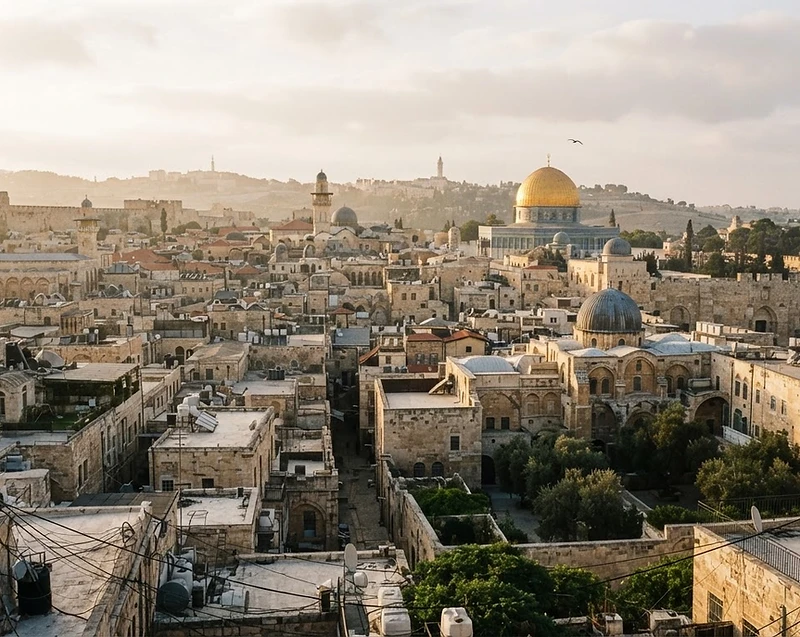
We conclude in Jerusalem. The Garden Tomb offers a quiet, contemplative space to reflect on the central tenet of the faith: He is not here; He has risen! (Luke 24:6). This is the culmination of your Israel trip devotional. Without the Resurrection, the rest of the journey is merely history; with it, the journey is an invitation into eternal life. Challenge your group to carry this reality back home to their families, workplaces, and local congregations.
Why Choose Verity Israel?
Leading a group requires more than just logistics; it requires a partner who understands the nuance of faith-based travel. At Verity Israel, we don’t just book hotels; we curate theological experiences. Our team of experts ensures that your itinerary is balanced, safe, and academically rigorous. We handle the complexities of transport, expert local guide selection, and spiritual logistics so you can focus on shepherding your flock. When you partner with Verity, you are choosing an organization committed to the integrity of the Gospel and the excellence of the pilgrimage experience.
Frequently asked questions
Q: How do I choose the best time of year for a pilgrimage? A: We recommend spring (March-May) or autumn (September-November) to avoid the extreme heat of summer and the potential for heavy winter rains, ensuring a comfortable experience for your group.
Q: How does Verity ensure the safety of our group? A: We maintain constant communication with local authorities and monitor regional updates daily, ensuring that our routes are secure and our groups are well-informed throughout the entire journey.
Q: Can we customize our devotional focus for our specific church denomination? A: Absolutely. Our team works closely with ministry leaders to integrate specific theological themes and liturgical needs into the daily itinerary, making your pilgrimage unique to your congregation.
Q: What is the typical group size for a Verity pilgrimage? A: While we can accommodate groups of varying sizes, we find that 20-30 participants offer the perfect balance for intimate group discussion and effective logistical management.