
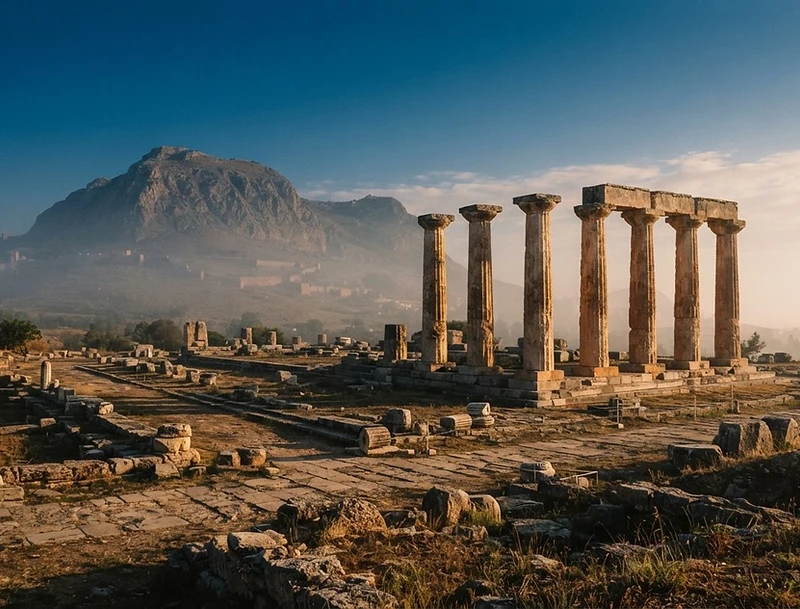
The Footsteps of Paul in Modern Media: Bringing Acts to Life for Your Ministry In the heart of Philippi, where the silt of the Angitis River has softened over millennia, a group of travelers stands in silence. They are not merely tourists; they are disciples attempting to bridge the two-thousand-year gap between themselves and the Apostle Paul. The morning air in Northern Greece is crisp, and as the group leader opens his Bible to Acts 16, the text ceases to be ink on a page. It becomes the geography of the very ground beneath their boots. This is the power of visual storytelling—the ability to transport a congregation from their pews to the precise locations where the gospel first breached the borders of Europe. As modern media continues to dominate how we consume narratives, the quest for a high-quality Greece Christian documentary has become an essential pursuit for pastors, professors, and ministry leaders who wish to ignite a renewed passion for the Book of Acts in their communities. ## The Intersection of Faith and Film: Why Media Matters In an age characterized by digital distraction, the challenge for leaders is not just to teach the Bible, but to immerse their audiences in the context of the Bible. Statistics from the Barna Group consistently reveal that visual engagement is a leading indicator for information retention in faith-based settings. When you present an Acts documentary of Greece, you are doing more than showing scenery; you are providing a visual hermeneutic. You are showing your people that the persecution Paul faced in Thessalonica—the "uproar of the city" mentioned in Acts 17:5—was not an abstract metaphor, but a visceral reality in the bustling, ancient marketplace. By utilizing professional-grade cinematography, we allow the landscape of Greece to become a silent witness to the truth of the New Testament. The crumbling marble of the Mars Hill (Areopagus) in Athens, where Paul stood before the Epicurean and Stoic philosophers, serves as a powerful testament to the clash between secular humanism and the resurrection of Christ. Modern media allows us to reconstruct these settings, providing depth and historical context that standard Sunday School materials often lack.

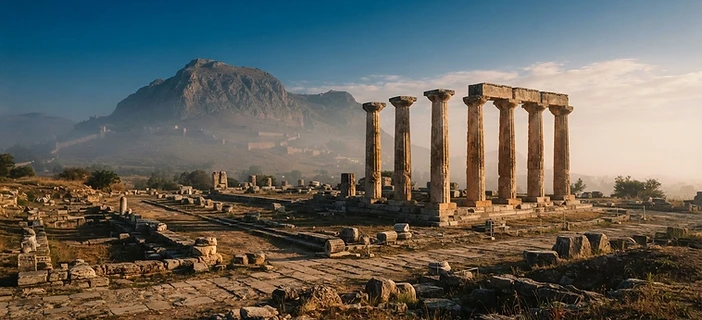
The Geography of Grace: Paul’s Itinerary and Your Curriculum For leaders planning a study series or a pilgrimage, understanding the itinerary of Paul is paramount. His journey through Greece was a strategic operation of immense theological significance. Consider the following key locations that serve as pillars for any robust exploration of Paul's mission: 1. Philippi: The site of the first church on European soil and the home of Lydia, the purple-dye merchant. It is a location of profound cultural transformation. 2. Thessalonica: A city of significant political unrest where Paul established a congregation that would become a model for faith, even under duress. 3. Berea: A city celebrated for its "noble" citizens who examined the Scriptures daily—a challenge we continue to extend to our congregations today. 4. Athens: The intellectual epicenter of the ancient world. Standing at the foot of the Acropolis, the scale of the pagan temples (the Parthenon) highlights the immense courage required for Paul to proclaim the "unknown God" in such a setting. 5. Corinth: A city defined by commercial wealth and moral decay. It is here that Paul penned his letters to the Thessalonians and began his profound correspondence with the Corinthians, addressing the messiness of church life in a broken world. By documenting these locations, leaders can create a multi-sensory curriculum that links the physical reality of the Mediterranean basin with the theological depth of the Pauline epistles. ## Practical Guidance for Ministry Leaders: From Screen to Sanctuary How do you translate the experience of an Acts documentary in Greece into a sustained movement of discipleship? It begins with intentional curation. Do not simply press 'play' on a film. Instead, use these strategies: * Pre-viewing Contextualization: Before showing footage of Ephesus or Corinth, lead your group through the biblical text. Assign specific passages (e.g., Acts 18 for Corinth) and ask them to visualize the socio-economic conditions Paul encountered. * The 'Ask the Expert' Model: Use the documentary as a springboard for further study. Invite a biblical scholar or a local ministry leader to lead a post-screening discussion on the geopolitical dynamics of the Roman Empire during the first century. * Reflective Pilgrimage: If you are planning a physical trip, use the documentary as a 'pre-departure' orientation tool. This ensures that when your pilgrims arrive, they aren't just looking at rocks—they are looking at landmarks of redemption. * Curated Digital Content: Supplement your series with high-quality photographs, maps of Paul's three missionary journeys, and digital infographics that summarize the cultural shifts he ignited. ## Why Verity Greece: Excellence in Theological Storytelling At Verity Journeys, we recognize that the medium of film is a high calling. We do not produce simple travelogues; we craft theological expeditions. We partner with world-class filmmakers, archaeologists, and theologians to ensure that every frame serves the narrative of the Gospel. Our commitment is to the 'verity'—the absolute truth—of the New Testament record. We believe that when your people see the actual path Paul walked through the narrow streets of Philippi or stand in the shadow of the Parthenon, their engagement with the Book of Acts shifts from intellectual observation to spiritual transformation. We provide the tools for you to become a guide, not just a narrator. ## Frequently Asked Questions Q: How can I integrate Paul in media into a traditional Sunday School setting? A: Segment your viewing. Break a 60-minute documentary into four 15-minute segments, pairing each with a specific chapter of the Book of Acts for deep-dive discussion. Q: Are these visual resources appropriate for students, or only for academics? A: Our resources are designed with a tiered approach. The cinematography engages the youth, while the scholarly commentaries provide the intellectual rigor required by seminary students and mature believers. Q: What is the benefit of a Greece Christian documentary over standard location photography? A: Motion and sound capture the atmosphere of the biblical world. Seeing the wind blow through the ruins and hearing the acoustics of an ancient amphitheater provides a contextual bridge that static photos simply cannot convey. Q: How does Verity Journeys ensure historical accuracy in its productions? A: We collaborate with field archaeologists and Greek historians to verify that the visuals and the script align with current research, ensuring your teachings remain biblically faithful and historically sound.
Paul in mediaGreece Christian documentaryActs documentary Greece