
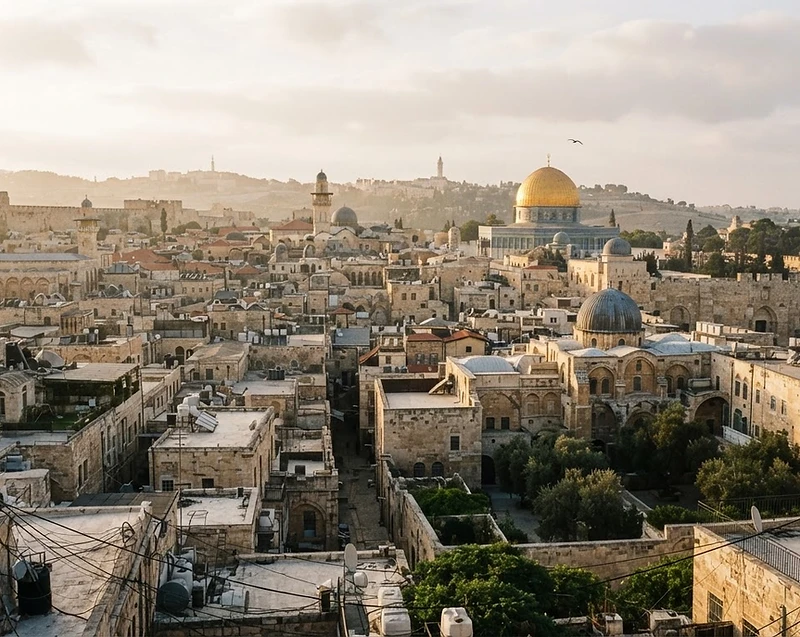
Qumran: Where the Dead Sea Scrolls Were Found. As you stand on the rugged, sun-drenched plateau of the Judean Desert, overlooking the shimmering turquoise of the Dead Sea, you are not merely standing in a landscape; you are standing in the silent library of history. For leaders of Christian Israel tours, few locations resonate as deeply with the intellectual and spiritual foundations of our faith as Qumran. It was here, in the hidden caves of the limestone cliffs, that the greatest archaeological discovery of the 20th century occurred—the Dead Sea Scrolls. For a church group, a professor leading a seminar, or a ministry team, a visit to Qumran is a profound encounter with the preservation of God’s Word. ## The Historical and Biblical Context. In 1947, a Bedouin shepherd stumbled upon a cave that had remained undisturbed for nearly two millennia. Inside lay clay jars containing ancient manuscripts of the Hebrew Bible and community documents that illuminated the world of the Second Temple period. This discovery forever changed our understanding of the text we read today. Qumran was the home of the Essenes, a pious Jewish sect that withdrew from the corruption of Jerusalem to live in the desert, awaiting the day of the Lord. Their commitment to scribal precision provides tangible proof of the reliability of the Old Testament. When your group walks these grounds, they are walking the same path as those who dedicated their lives to the meticulous preservation of Isaiah, the Psalms, and the Law.

What Your Group Will See and Do on a Qumran Tour. A well-planned Qumran tour with Verity Israel is immersive and educational. First, your group will explore the visitor center, which features an excellent multimedia presentation bringing the site to life. Following this, you will walk through the archaeological ruins of the Essene settlement. You will see the complex system of cisterns and ritual baths (mikva'ot) that suggest a life of intense spiritual purification. Your guide will point out the Scriptorium—the very room where many scrolls were believed to have been copied by hand. Looking up toward the steep cliffs, you will see the dark mouths of Caves 1, 4, and 11, where the scrolls were safely hidden during the Roman siege of Jerusalem in 70 AD. Seeing these physical locations provides a visceral connection to the past that a textbook simply cannot replicate. ## Biblical Teaching and Reflection. The theological implications of Qumran are staggering. When we look at the Great Isaiah Scroll, we see words of the prophet written centuries before the birth of Christ that perfectly align with the Isaiah scroll found in the Masoretic texts of the Middle Ages. This confirms the faithfulness of the scribal tradition mentioned in 2 Timothy 3:16. Furthermore, your group can reflect on Isaiah 40:3: “A voice of one calling: ‘In the wilderness prepare the way for the Lord; make straight in the desert a highway for our God.’” This verse was central to the Essene identity and also quoted in the Gospels to describe John the Baptist. Reflecting on this passage in the very wilderness where these words were lived out allows your group to experience a deeper understanding of the preparation for the Messiah. Discussing the life of the Essenes also invites a conversation about holiness and the danger of religious isolation, challenging your ministry members to consider how we engage with the world while maintaining our distinct identity in Christ. ## Practical Guidance for Ministry Leaders. Leading a group through the Holy Land requires careful planning. Qumran is located roughly 30 minutes from Jericho and an hour from Jerusalem, making it a perfect stop on your way to the Dead Sea or Masada. Seasonality is critical; the Judean Desert can reach extreme temperatures. We highly recommend visiting between October and April. If you travel in the summer months, schedule your arrival for early morning to beat the heat. Regarding accessibility, the main paths are well-maintained and accessible for most individuals, though the walk to the cave viewpoints involves uneven, rocky terrain. Budget at least two to three hours for the full site experience, including the lecture and the short hike. Pacing is key; ensure your group has ample hydration, as the desert climate is deceptively dry. ## Why Verity Israel is Your Best Partner. At Verity Israel, we understand that a pilgrimage is not just a vacation—it is a spiritual investment in the lives of your congregants or students. We specialize in faith-centered group experiences that prioritize theological depth and logistical excellence. Unlike standard tourism providers, we ensure that every stop, including Qumran, is led by licensed, Bible-believing guides who can bridge the gap between archaeology and scripture. We handle the complexities of transportation, site entry, and catering, allowing you to focus entirely on leading your people through their spiritual journey. We provide the resources you need, from devotions tailored to specific sites to pre-trip briefing packets that prepare your group's hearts for what they are about to experience. ## Frequently Asked Questions. Q: Is the Qumran site accessible for those with limited mobility? A: Yes, the main visitor center and the primary archaeological circuit are paved and accessible. While the steep trails to the cave entrances are not suitable for those with limited mobility, the main site offers excellent vantage points that allow everyone to appreciate the history of the discovery. Q: How long should we dedicate to a visit here? A: We recommend allocating approximately 2.5 hours. This allows time for the informative film, the guided walk through the ruins, time for group reflection, and a gift shop visit. Q: Can we host a private devotional service at Qumran? A: Absolutely. We can reserve quiet areas within the site for your group to hold a short worship or teaching session, provided it does not disrupt other visitors. We often find that reading the Dead Sea Scrolls-related scripture passages on-site is the highlight of the trip for many participants. Q: Does this location provide a good opportunity to learn about the history of the Bible? A: It is arguably the best location in Israel for this. The connection between the physical scroll fragments and the text of the modern Bible provides an unparalleled "aha" moment for students of the Word.
Qumran Dead Sea ScrollsQumran tourChristian Israel tours