
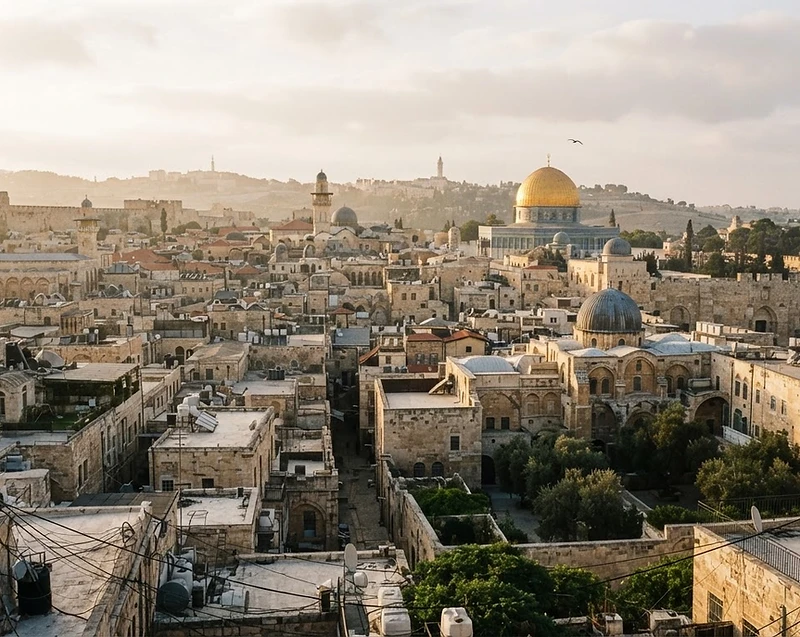
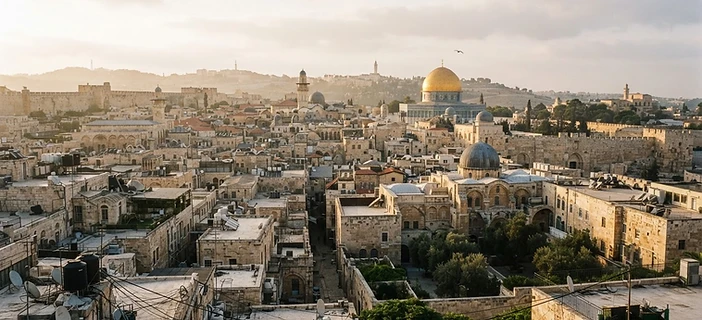
Accessibility on a Holy Land Tour: Walking Where Jesus Walked with Every Member of Your Flock. The morning sun crests over the Judean hills, casting a golden hue upon the stone walls of Jerusalem. For a group leader, the anticipation is palpable. You are guiding your congregation through the land of the Bible—a journey that promises to transform faith into a tactile, living reality. Yet, for many ministry leaders, the dream of an accessible Israel tour is shadowed by the reality of ancient architecture. How do you lead a group where some members use wheelchairs, walkers, or have limited stamina? The landscape of Israel, while rugged and rich in history, is surprisingly accommodating when planned with professional expertise. At Verity Journeys, we believe that the invitation of the Gospel is for everyone, and therefore, the Holy Land must be accessible to every follower of Christ. From the bustling streets of the Old City to the serene shores of the Sea of Galilee, the story of redemption belongs to those who have difficulty walking just as much as it belongs to the able-bodied. Biblical history is a history of inclusivity. In 2 Samuel 5:8, David conquered the fortress of Zion, yet later, he invited Mephibosheth, a man with mobility limitations, to dine at his table as an equal (2 Samuel 9:7). As leaders, we mirror this heart when we ensure that no member of our church family is left behind in the lobby of a hotel while others encounter the Jordan River or the Garden Tomb. ## What a Group Sees and Does on an Accessible Holy Land Tour. An accessible Israel tour is not a 'lite' version of the traditional pilgrimage; it is a full, immersive encounter with the geography of faith. Your group will still traverse the same sacred soil. In Jerusalem, we utilize specific routes through the Old City that avoid the steepest, most uneven stairs, focusing on the wider, modernized pathways of the Christian Quarter. You will visit the Western Wall, which features dedicated accessible viewing platforms and ramped access, allowing everyone to touch the stones and offer prayers. In the Galilee, we visit Capernaum, where the synagogue ruins are now surrounded by flat, paved walkways, and the Mount of Beatitudes, which features beautifully landscaped, accessible gardens. We incorporate boat rides on the Sea of Galilee using vessels equipped with ramps, allowing your group to experience the same waters where Jesus calmed the storm. The highlight for many is the baptismal site at the Jordan River. We prioritize sites like Yardenit, which has been meticulously designed with handrails, non-slip surfaces, and gradual entry points, ensuring that the act of baptism is dignified and safe for those with mobility challenges.

Biblical Teaching: The Theology of the 'Whole Body' of Christ. The act of bringing a diverse group to the Holy Land is a profound theological statement. As we read in 1 Corinthians 12:22-25, 'On the contrary, those parts of the body that seem to be weaker are indispensable... so that there should be no division in the body, but that its parts should have equal concern for each other.' When you bring a student, a retiree with limited mobility, or someone living with a disability to Israel, you are demonstrating the Body of Christ in motion. Your teaching on-site becomes more powerful when your congregants witness the landscape through the eyes of those who might experience it differently. When you stand at the Pool of Bethesda (John 5), where Jesus healed the man who waited thirty-eight years for help, use that moment to discuss our responsibility as believers to lower one another down through the roof, just as the friends did in Mark 2. An accessible tour does not remove the challenge; it provides the infrastructure to meet the challenge together. Your teaching will resonate deeper because your ministry practice has matched your proclamation of grace. ## Practical Guidance for Leaders: Logistics and Pacing. Success in an accessible Holy Land tour hinges on three pillars: timing, pacing, and vehicle selection. First, timing: Avoid the extreme heat of mid-July and August. The best seasons are the shoulder months—March to May or late October to November. The mild climate prevents the exhaustion that heat triggers in those with limited mobility. Second, pacing: A 'do-it-all' itinerary is the enemy of accessibility. We recommend a 'slow-travel' approach. Instead of rushing to five sites in a day, aim for two substantial encounters. This allows members to take their time, find shade, and absorb the spiritual weight of the location without feeling pressured. Third, vehicle selection: Verity Journeys utilizes luxury, hydraulic-lift-equipped motorcoaches. These aren't just buses; they are mobile sanctuaries. Ensure your tour provider understands the technical specifications of your group’s equipment. We also emphasize the importance of pre-trip communication. Ask your congregants about their specific mobility needs months in advance. Knowing who needs a shower chair, who requires a ground-floor hotel room, or who needs an extra 'pit stop' allows our guides to prepare the staff and venues ahead of time. Accessibility is not an afterthought; it is baked into the itinerary from the first day of planning. ## Why Verity Journeys? The Verity Difference. We understand that leading a group is not just about logistics; it is about spiritual stewardship. A pastor or professor has enough on their plate preparing homilies, handling congregational dynamics, and managing expectations. When you partner with Verity Journeys, you are delegating the 'heavy lifting' of logistics to a team that specializes in disability-inclusive travel. We don't just 'make do' with standard tours; we build custom routes. Our guides are trained to identify the subtle pitfalls of the terrain—the loose cobblestone, the steep incline, or the lack of accessible restrooms—and steer the group toward grace. We prioritize partner hotels that meet international standards for accessibility, ensuring your members can rest comfortably. We believe in transparency and truth—the very essence of 'Verity.' We will tell you if a site is truly inaccessible and suggest a superior alternative that provides the same spiritual impact without the physical strain. ## Frequently Asked Questions. Q: Is it really possible for a wheelchair user to visit the Old City of Jerusalem? A: Yes. While much of the Old City is ancient and uneven, the major Christian, Jewish, and Muslim quarters have accessible paths, and our guides use specific routes that minimize the impact of stairs, ensuring your group can experience the Church of the Holy Sepulchre and the Western Wall safely. Q: How does the pacing of an accessible tour differ from a standard tour? A: An accessible tour moves at a deliberate, thoughtful pace. We focus on 'depth over breadth,' ensuring members have ample time to navigate sites without fatigue, which often leads to a more profound, less hurried spiritual connection with the land. Q: What happens if a member of my group has a sudden mobility issue? A: Our vehicles always carry lightweight, collapsible transport chairs. If someone gets tired or experiences a mobility issue during the trip, we are prepared to accommodate them immediately so they don't have to miss the day's events. Q: Are there accessible options for baptism in the Jordan River? A: Absolutely. We exclusively use sites like Yardenit, which are fully equipped with sturdy handrails, ramped entryways into the water, and nearby accessible changing facilities, ensuring a respectful and safe baptism experience for all participants. Your journey to the Holy Land is a significant milestone for your ministry. With Verity Journeys, you are not just booking a trip; you are ensuring that your group arrives, experiences the transformative power of the Scriptures, and returns home with their faith firmly rooted in the land where the Word became flesh.
accessible Israel tourdisability Holy LandChristian Israel tours