
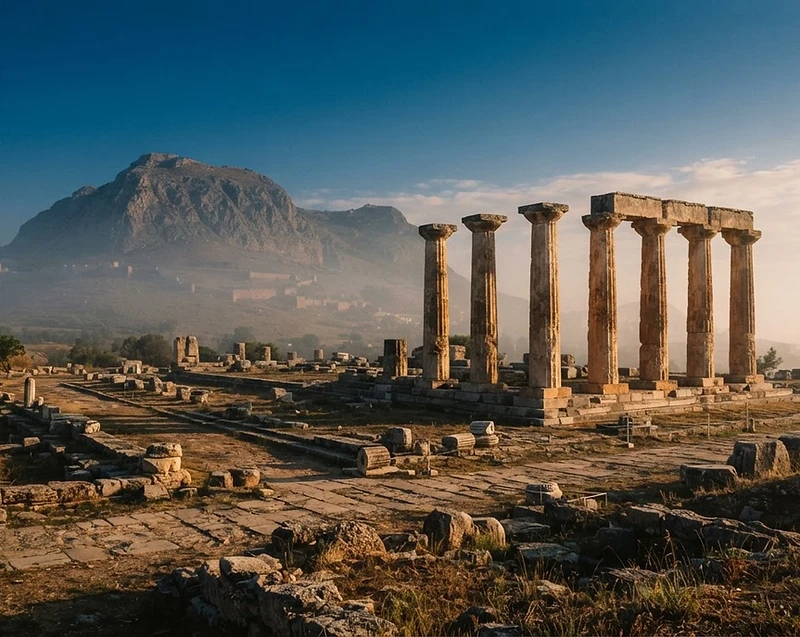
Paul's Letters in Place: A Guide to the Epistles
Imagine standing in the very spot where a Roman magistrate once stood, feeling the cool Aegean breeze that likely brushed the face of the Apostle Paul as he preached to the curious minds of the Areopagus. For those leading congregations, campus ministries, or small groups, the Pauline epistles are foundational texts, but they are often read as static documents. By bringing your group to the cradle of the early church, you transform these theological arguments into lived history. A pilgrimage to Greece is not merely a vacation; it is an immersive biblical education that breathes life into the letters of Paul.
Walking the Path of the Apostle
When you embark on Christian Greece tours, you are tracing the expansion of the Gospel into the Gentile world. Your group will begin in the modern, bustling city of Thessaloniki, formerly Thessalonica. Here, Paul faced intense opposition, yet he planted a resilient church that became a model for the region. Reading 1 Thessalonians 1:6–8 in the city where it was written—hearing the echoes of Paul’s words about their faith being known throughout Achaia—is a profound experience. From there, your group will travel to Philippi, the site of the first Christian congregation on European soil. Standing by the river where Lydia was baptized (Acts 16:13–15) provides a visceral connection to the beginnings of the mission. You will see the ruins of the Roman forum, the prison where Paul and Silas sang hymns in the dark, and the ancient theater that remains a monument to Roman influence. It is here, while reviewing the joyful gratitude of Philippians, that your students will understand why Paul called this community his 'joy and crown.'
Deepening Biblical Understanding in Corinth
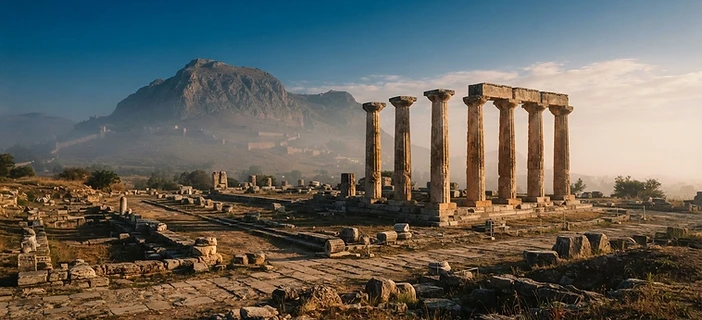
Perhaps no city illuminates the challenges of the early church better than Corinth. This was a cosmopolitan, decadent, and deeply divided urban center. As you guide your group through the ruins, pointing out the Bema seat where Paul stood before Gallio (Acts 18:12–17), the intensity of 1 Corinthians makes perfect sense. The letter was not written in a vacuum; it was a desperate, love-filled corrective for a church struggling with immorality, social hierarchy, and factionalism. Seeing the physical proximity of the Temple of Apollo to the market helps leaders explain to their groups why the issue of food sacrificed to idols (1 Corinthians 8) was such a volatile matter. When you sit with your group in the shadow of the Acrocorinth, reading 1 Corinthians 13, the 'love chapter,' you gain a new perspective on why Paul emphasized unity above all else in such a fractured environment.
Practical Guidance for Group Leaders
Planning a pilgrimage requires meticulous attention to the cadence of the trip. Greece is a terrain of both breathtaking beauty and strenuous hiking. For church groups, I recommend a ten-day itinerary to allow for enough depth without exhaustion. The best seasons for travel are the shoulder months—late April to early June or late September to October. During these times, the Mediterranean heat is manageable, and the crowds at major sites like Ancient Corinth or the Philippi archaeological park are significantly reduced.
Accessibility is a vital consideration. While many sites in Greece involve uneven terrain and steep inclines, they are generally manageable for active groups. However, ensure your travel partner provides high-quality, professional local guides who can navigate the logistics and provide historical context that complements your biblical focus. Pacing is equally important; do not attempt to visit more than two major sites in a single day. Allow time for prayer, debriefing, and communal worship on-site. The most powerful moments often occur when the lecture stops and the prayer begins.
Why Verity Journeys for Your Greece Experience
At Verity Journeys, we believe that travel is an extension of discipleship. We are not just a travel agency; we are partners in your ministry. We understand that your goal is not just to see ancient architecture, but to facilitate a life-changing encounter with God’s Word. We handle every detail, from comfortable, group-friendly accommodations that facilitate evening fellowship, to private transportation that respects your schedule. Our expertise in designing Christian Greece tours ensures that your time is spent on sites that directly illuminate the Pauline epistles. We take care of the logistics so you can focus on shepherding your flock, whether that means facilitating a sermon on the steps of the Parthenon or guiding a quiet time of reflection in the ruins of the agora.
Navigating the History of the Aegean
Beyond the primary sites of the epistles, your journey will take you through the broader landscape of the Greco-Roman world. Visiting Athens is essential, not just for the Acropolis, but for the Areopagus (Acts 17:16–34). This is where Paul engaged the philosophers with intellectual courage. By walking through the ruins of the Parthenon and then down to the site where Paul addressed the Epicureans and Stoics, your group will learn the art of cultural engagement. Paul did not shy away from the culture; he used their own poets and altars as a bridge to the Gospel. This serves as a powerful model for modern ministry in a post-Christian society.
Frequently Asked Questions
Q: What is the ideal group size for a meaningful pilgrimage? A: We recommend groups of 20 to 40 participants. This size is large enough to foster a sense of community and shared discovery, yet small enough to navigate historical sites and local transport efficiently.
Q: How much walking is required during these tours? A: Most sites in Greece involve significant walking on uneven, historic stone paths. We recommend participants be comfortable standing and walking for 2-3 hours at a time to get the most out of the experience.
Q: Will we have opportunities for corporate worship? A: Absolutely. Verity Journeys prioritizes time for groups to hold devotional services, prayer times, and even communion at selected outdoor locations or private chapels, creating an environment where the Word can be honored as it was in the first century.
Q: Are these tours suitable for those with limited biblical knowledge? A: Yes. Our itineraries are designed to be accessible for everyone, from seminary students to those new to the faith. Our primary goal is to make the history accessible and the theology applicable to modern daily life.
As you consider leading a group, remember that you are doing more than planning an trip; you are creating a legacy. When your group returns, the letters of Paul will never be just words on a page again. They will be places they have walked, stones they have touched, and memories that will sustain their faith for years to come. Let us help you craft this journey of a lifetime.